Future Frequency: building a radio station from the future
I've been fascinated by a track called Taijin Kyofusho by The Evpatoria Report, a Swiss post-rock band. It weaves radio chatter from the last minutes of the Columbia mission — which ended in catastrophe at re-entry — into the song, and it always leaves my spine chilling. But sit with it long enough and something gentler surfaces from under the weight: mission control chatter is quietly ambient. It settles in behind the music, and I've always found that strangely soothing.
I wanted a whole night radio station built around that mix. The tapes it draws on all point backward, though — Apollo, Columbia, the archive. The station I kept imagining pointed the other way: a broadcast from a future where voices between Earth and space are just late-night radio. Always on, straight-faced, transmitting from the year 2086. So I commissioned one to Plum's Fable-5 campaign: Future Frequency, live at 104.7 Night MHz.
Fable asked me a bunch of questions; I answered and pointed it to some resources, and it generated a very good working version. Then I took it back and gave it a taste makeover. This post is the story of that makeover.
Finding the taste
The first seed is a photo from a Substack event in New York that I found on LinkedIn. That warm retro-orange LED sunrise stuck with me.
The second came from X: a sheet of micrographics I'd kept bookmarked for months — calibration marks and tiny technical labels, the kind of detail that makes a surface feel like an instrument.
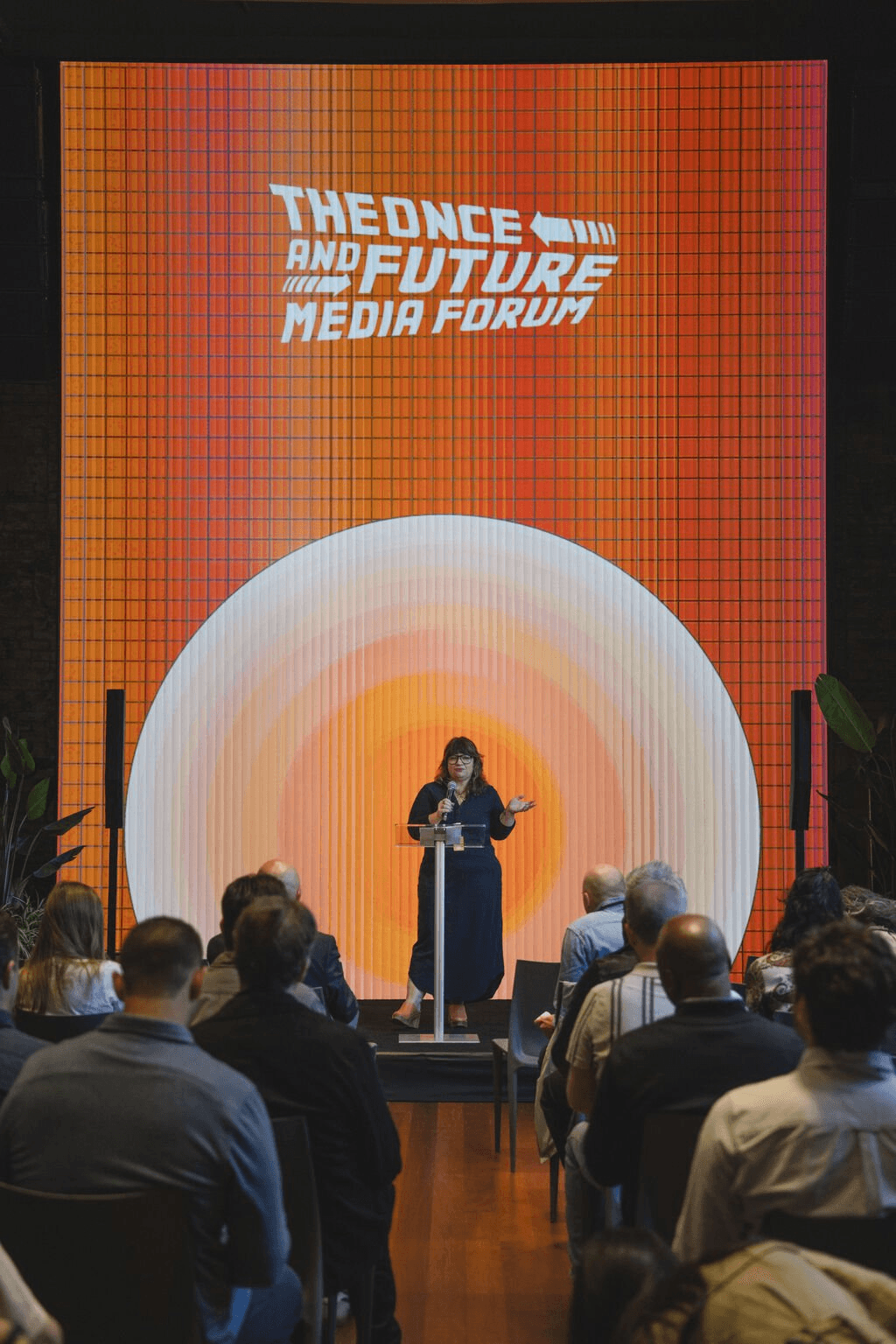
Seed 01 — a Substack event in NYC, found on LinkedIn.
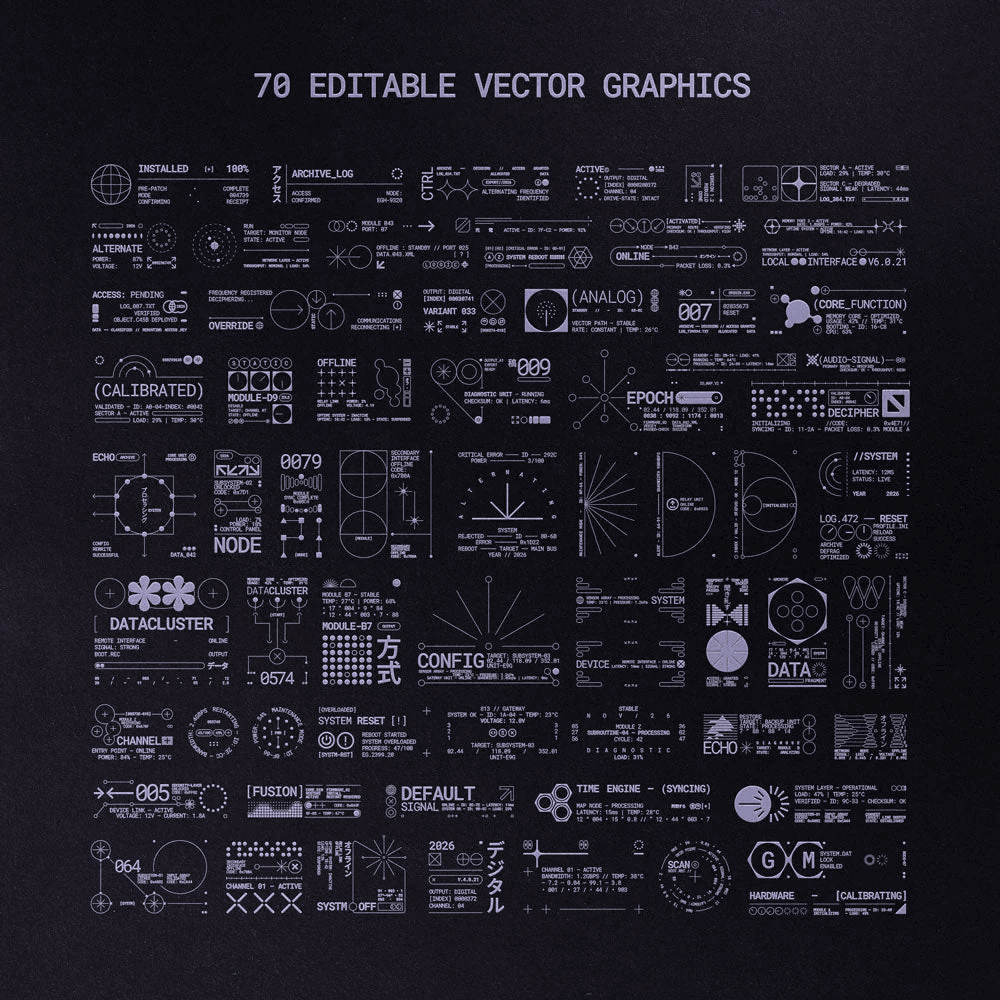
Seed 02 — the micrographics sheet, bookmarked from X.
Taste is mostly noticing — keeping what raises your pulse, then putting the saved things from your archive together until they turn into a new form that gives you the pulse again :)
I gave both images to gpt-image-2 and asked it to imagine the station. It came back with a whole identity — a sunrise, a palette, and a voice.
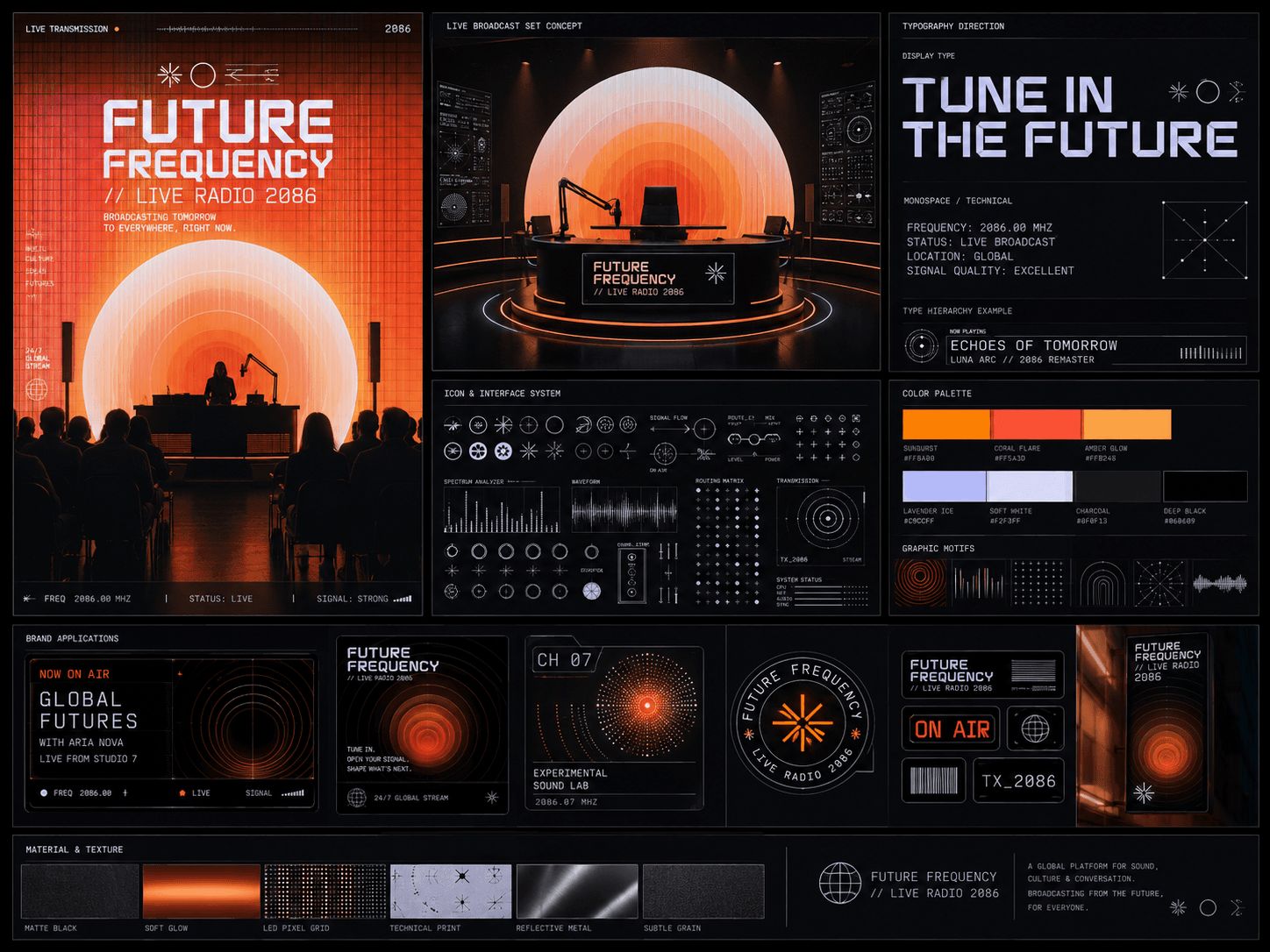
gpt-image-2 design moodboard — posters, icon system, typography, color palette, brand applications.
Three layers of sound
The music is the part I'd been chasing all along. It's three layers, mixed live:
- The bed — ambient tracks from Mixkit.
- The ground loop — real Apollo 14 and 15 air-to-ground audio, public domain, filtered until the voices sit like a transistor radio.
- The static — synthesized, never recorded.
The desk below was the sound's playground — where the three layers got tuned against each other until the mix felt right. And it's live: tune in, ride the faders, pull the dial off-station, and let go to watch it walk home.
Midway through I found that SomaFM's Mission Control has been layering ambient music with Apollo audio for years. Oddly comforting — a good itch is usually a frequency someone else is already tuned to.
That's the whole station — a sunrise, three layers of sound, and a dial that always finds its way home. And that's the process, start to finish: inspiration → moodboard → design system → playground → final app.
The night side of the dial is open.